


Table of Contents
Picture this: a storm is raging outside. The wind howls, the rain lashes against your windows, and suddenly—silence. The familiar hum of your refrigerator stops. The lights flicker and die. Your Wi-Fi router goes dark. You're left in the unsettling quiet of a blackout. Now, how long until that uncertainty turns into worry about spoiled food, lost work, or your family's comfort and safety?
This scenario is becoming more common than ever. But what if you could flip a switch and restore power to your essential devices, silently and cleanly, without ever worrying about toxic fumes or a trip to the gas station? Enter the solar-powered generator: your modern, eco-friendly key to energy resilience.
Choosing the right one isn't just about buying a big battery. It's about crafting a personalized power solution for your home. This guide will cut through the technical jargon and give you the confidence to choose the perfect solar generator to keep your life running smoothly, no matter what happens outside.

Why Your Home Needs a Solar Generator: It's More Than Just Blackouts
Sure, a solar generator is your hero during a power outage. But its value goes far beyond that. Think of it as your home's insurance policy against unpredictability.
- Weathering the Storm: With climate change increasing the frequency and intensity of extreme weather, the grid is more vulnerable than ever. A solar generator is a silent guardian during hurricanes, winter storms, and heatwaves.
- Financial Sense: Why pay peak utility rates when you can harness free power from the sun? Use your solar generator to run appliances during the day, reducing your electricity bill. It's an investment that pays for itself.
- The Freedom of Portability: Unlike a permanently installed gas generator, a portable solar power station can be your companion for weekend camping trips, tailgating events, or powering a project in the backyard. It's backup power that goes where you go.
- Peace and Quiet: Forget the deafening roar and fumes of a traditional gas generator. Solar generators operate in complete silence and produce zero emissions. You can safely run them in your garage or even inside your home.
Demystifying the Solar Generator: It's a Power Station, Not What You Think
Let's clear something up first. When we say "solar generator," we're not talking about a loud machine. We're talking about a sophisticated, all-in-one portable power station that is charged primarily by solar panels. It's a simple, elegant system: sun in, power out.
The Heart: Battery Storage Capacity (Wh)
This is the most crucial spec. Measured in Watt-hours (Wh), it tells you how much energy is in the "tank." Think of it like the size of your car's gas tank. A bigger number means it can power your devices for longer.
- Small (300-500Wh): Great for charging phones, laptops, and running a small fan for a few hours. Perfect for short trips or very minimal backup.
- Medium (1000-2000Wh): This is the sweet spot for most homes' essential backup needs. It can keep your fridge cold, your lights on, and your communication devices charged for a day or more.
- Large (2000Wh+): For serious backup power. You can run more demanding appliances like space heaters, microwaves (briefly), and power tools. With expansion options, you can get into whole-house backup territory.

The Brain: The Inverter (W) & Why Pure Sine Wave is Non-Negotiable
The inverter's power rating, in Watts (W), tells you what it can run at any one moment. It's the size of the pipe the energy flows through. If you try to run a 1500W space heater on a 1000W inverter, it will shut off.
But the type of inverter is even more important. You must choose a Pure Sine Wave inverter. The outdated alternative, Modified Sine Wave, can damage sensitive and modern electronics like laptops, medical equipment (CPAP machines), and variable-speed motors in appliances. Pure Sine Wave provides clean, grid-quality electricity that is safe for everything you plug into it.
The Lungs: Solar Panels and Recharging
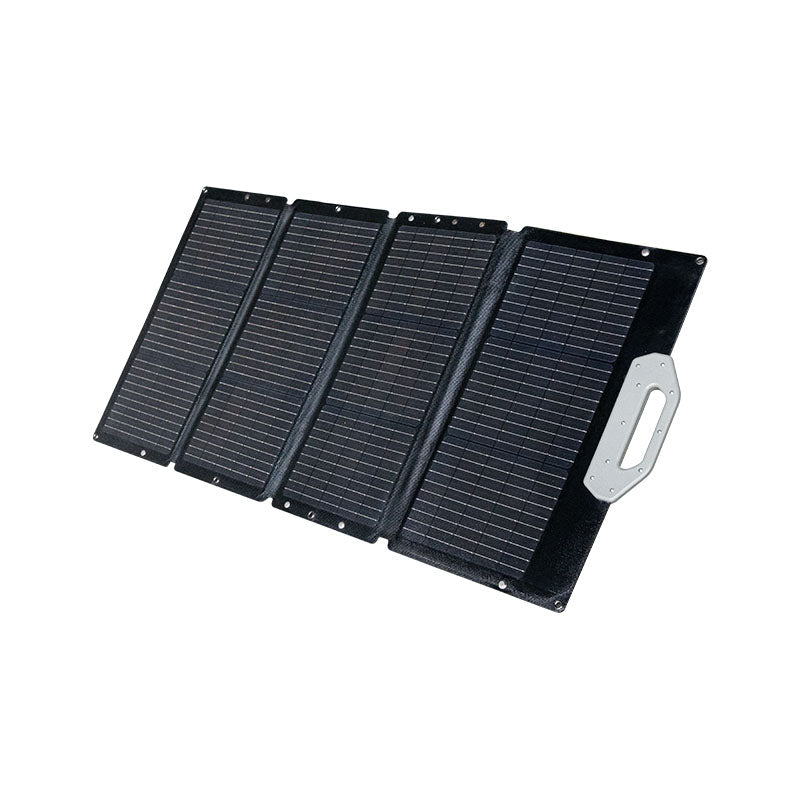
Your power station is useless without a way to fill it up. Solar panels are your off-grid lifeline. Their power is measured in Watts (W). The higher the solar panel Wattage, the faster you can recharge your station's battery. A good rule of thumb is to get solar panels with a total Wattage that matches or exceeds your power station's capacity for efficient recharging (e.g., a 200W solar panel for a 2000Wh power station).
The Nervous System: Charge Controllers (PWM vs. MPPT)
This is the tech that manages the energy flow from the solar panels to the battery. MPPT (Maximum Power Point Tracking) controllers are the gold standard. They are significantly more efficient (up to 30% more!), especially in non-ideal conditions like cloudy days or partial shade. They extract every last drop of power from your solar panels, getting you back to a full charge faster.
The Great Debate: Portable Solar Generator vs. Whole-House System
This is the fundamental choice you need to make. Your decision hinges on your budget, your needs, and how you plan to use it.
Portable Power Stations: Flexibility and Affordability
This is what most people think of as a solar generator. It's an all-in-one unit with a battery, inverter, and outlets. You plug your devices directly into it.
- Pros: More affordable, no installation required, completely portable, silent, zero emissions, multi-purpose (home, car, outdoors).
- Cons: Limited capacity for large appliances, requires manual setup during an outage.
Whole-House Systems: Total Home Integration
These are large, permanent systems installed by an electrician. They connect directly to your home's circuit breaker panel and often require a dedicated set of solar panels and a large battery bank.
- Pros: Powers your entire home automatically, can run high-wattage systems like central A/C (if sized correctly), seamless operation.
- Cons: Very high upfront cost, requires professional installation, not portable.
Side-by-Side Comparison: Which One is Your Champion?
| Feature | Portable Power Station | Whole-House System |
|---|---|---|
| Cost | $$$ | $$$$$ |
| Installation | DIY, Zero Cost | Professional, High Cost |
| Portability | Yes, by design | No, permanent |
| Automation | Manual Connection | Automatic Switchover |
| Best For | Essential circuits, outages <24-48 hrs, outdoor use | Whole-home backup, long-term outages |
For most people, a high-capacity portable power station offers the perfect balance of capability, cost, and flexibility.
Your Home's Power Audit: What Do You REALLY Need to Run?
You don't need to back up your entire house. You need to back up your priorities. Start by asking: "What is absolutely essential for my family's safety and comfort for the next 24-48 hours?"
Essential Circuits: The Bare Necessities (The Lifesavers)
- Refrigeration (150-700W running): To prevent food spoilage.
- LED Lights (10-20W): For safety and comfort at night.
- Phone/CPAP Machine/Laptop (5-100W): For communication and health.
- Wi-Fi Router & Modem (10-20W): For information and staying connected.
- A Small Fan or Heater (50-500W): For temperature control.
Important Comforts: Keeping Sane During an Outage
- TV (100-200W): For news and entertainment.
- Coffee Maker (800-1500W): A true necessity for many!
- Microwave (1000-1500W): For quick meal preparation.
Calculating Your Total Watt-Hour (Wh) Needs
- List Devices: Write down each device you want to power.
- Find Running Watts: Check the label on the device or its manual for its "Running Wattage."
- Estimate Runtime: Decide how many hours per day you'll need to run each device.
- Calculate: Device Watt-Hours = Running Watts (W) x Hours (h)
- Add Them Up: Total Daily Wh = Sum of all Device Watt-Hours
Example:
- Refrigerator (200W) for 8 hours = 1600Wh
- 10 LED Lights (15W) for 5 hours = 75Wh
- Phone Charging (10W) for 3 hours = 30Wh
- Wi-Fi Router (15W) for 8 hours = 120Wh
- Total Daily Need: 1600 + 75 + 30 + 120 = 1825Wh
This tells you you'd need a power station with at least 2000Wh of capacity to get through one day.
Key Features to Look For: Beyond the Basic Specs
Multiple Charging Methods: Solar, AC, and DC
A versatile unit can be charged from a wall outlet (fast!), a car socket (on the go!), and of course, solar panels (for true independence). This ensures you're never without a way to recharge.
Output Ports Galore: AC, USB-A, USB-C, DC5521
Look for a plethora of ports. Multiple AC outlets prevent daisy-chaining dangerous extension cords. USB-C ports with Power Delivery (PD) can fast-charge modern laptops and phones. The more, the merrier.
Display and Monitoring: Knowledge is Power
A clear screen that shows input Wattage (how fast you're charging), output Wattage (how much you're using), and estimated battery runtime is invaluable for managing your power effectively.
Portability & Form Factor: Wheels, Handles, and Weight
A 2000Wh unit can weigh over 50 lbs (23 kg). A sturdy handle and robust wheels are not just a convenience; they're a necessity.
Cutting-Edge Tech: MPPT, LiFePO4, and Expandability
Why LiFePO4 Batteries are a Game-Changer
Forget the old lithium-ion. LiFePO4 (Lithium Iron Phosphate) batteries are the new standard for solar generators. They are incredibly safe, non-toxic, and last dramatically longer—over 3,500 charge cycles compared to maybe 500-1000 for traditional batteries. This means they can last for a decade or more of daily use. They are worth the investment.
The Magic of MPPT Charge Controllers
As mentioned, insist on an MPPT charge controller. It's the mark of a quality unit designed for serious solar charging, not just a weekend toy.
The Power of Expansion: Doubling Your Capacity
Some power stations allow you to connect additional external battery packs. This "expandability" means you can start with a base unit and double or even triple your capacity later as your needs or budget grow. This is a huge advantage.
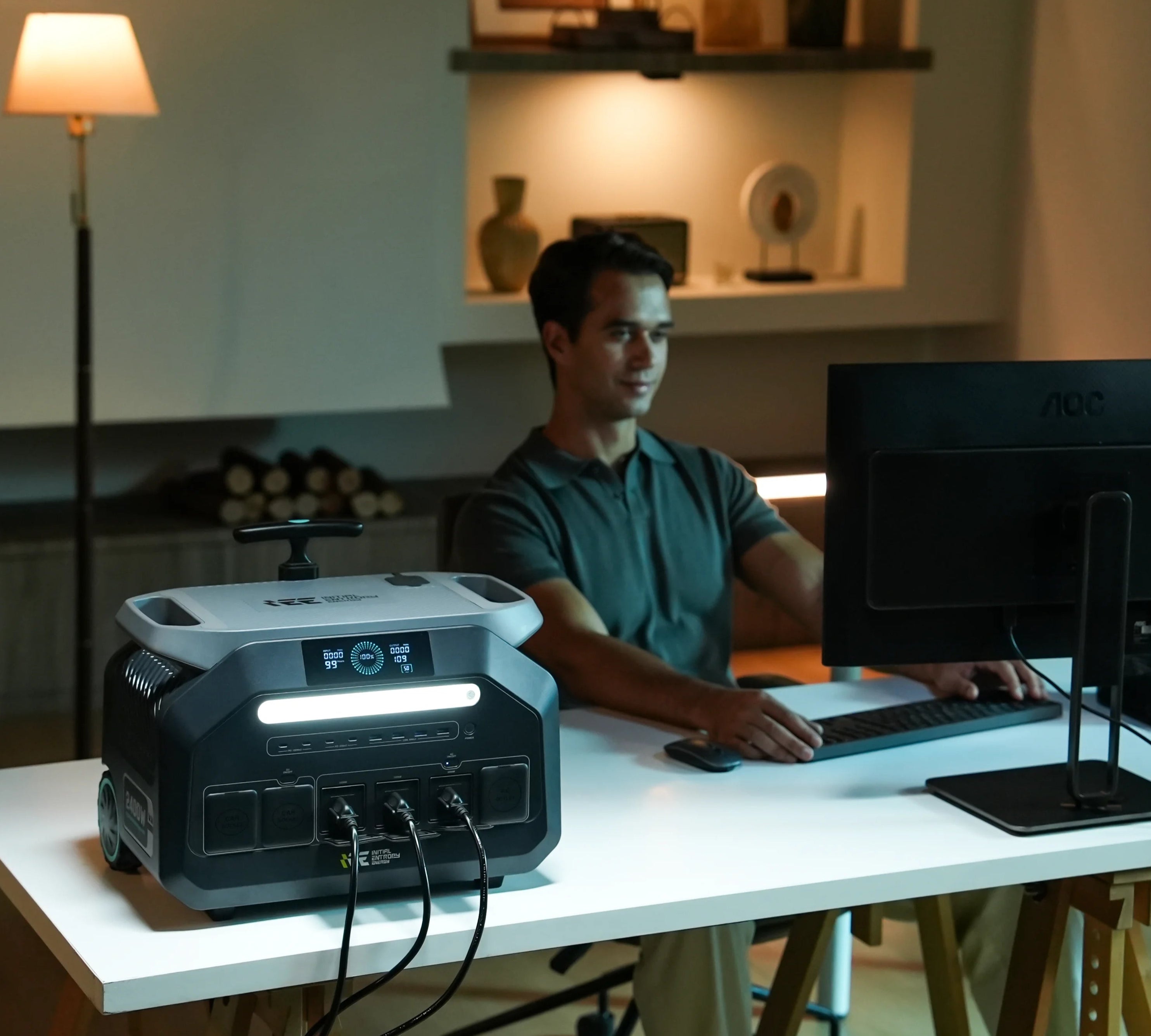
Introducing the IEETek P1800: Your Partner in Energy Independence
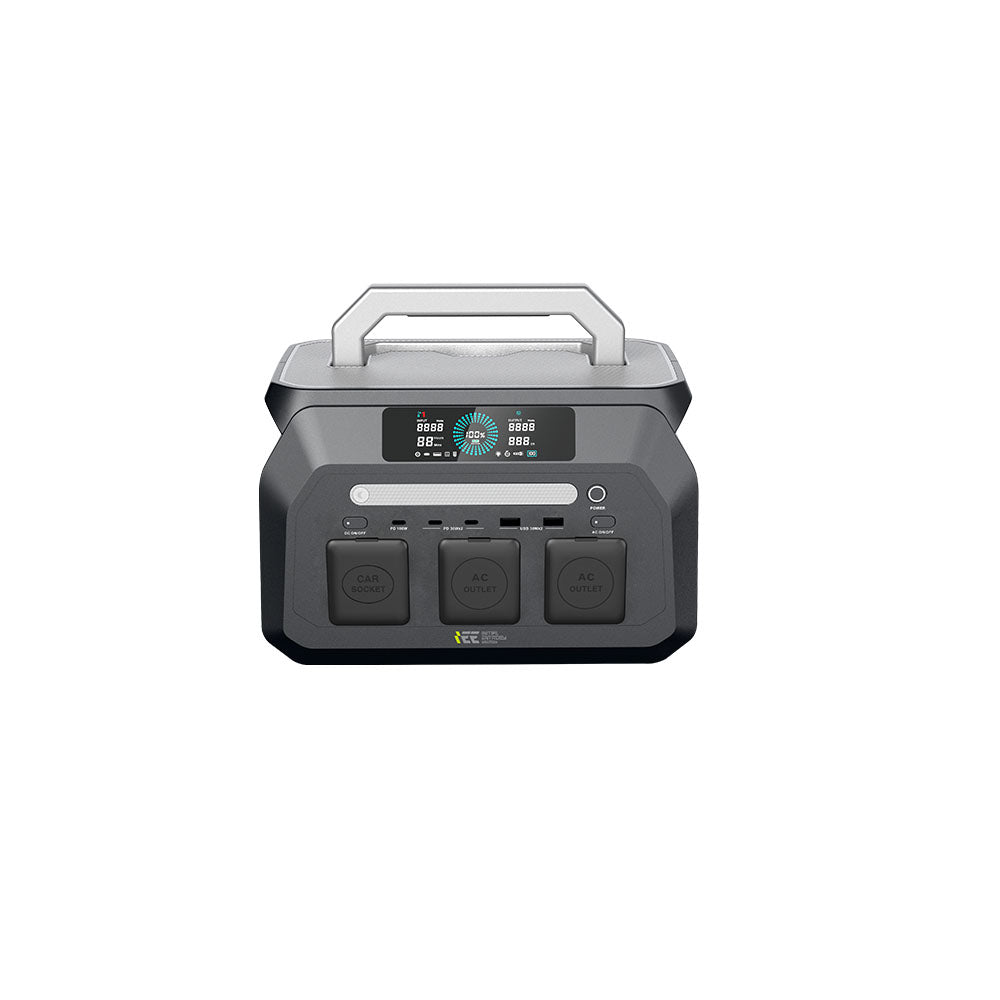
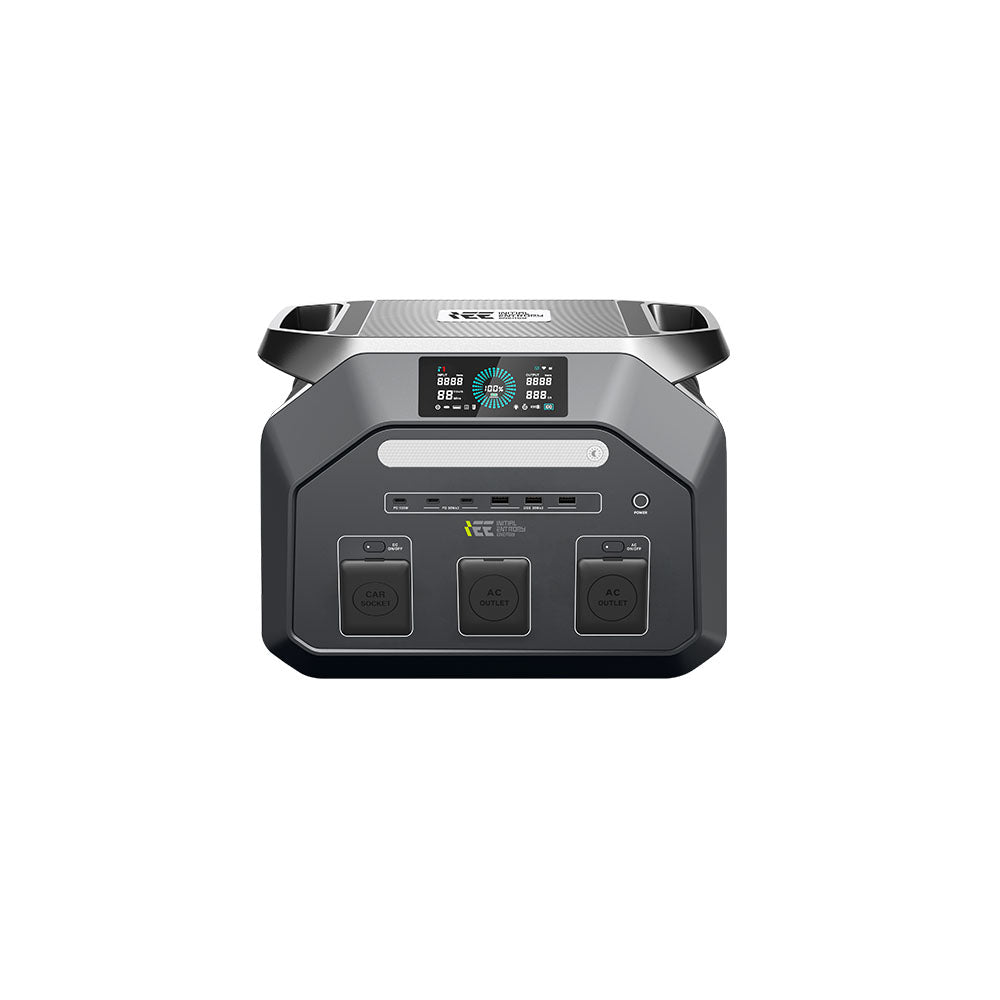
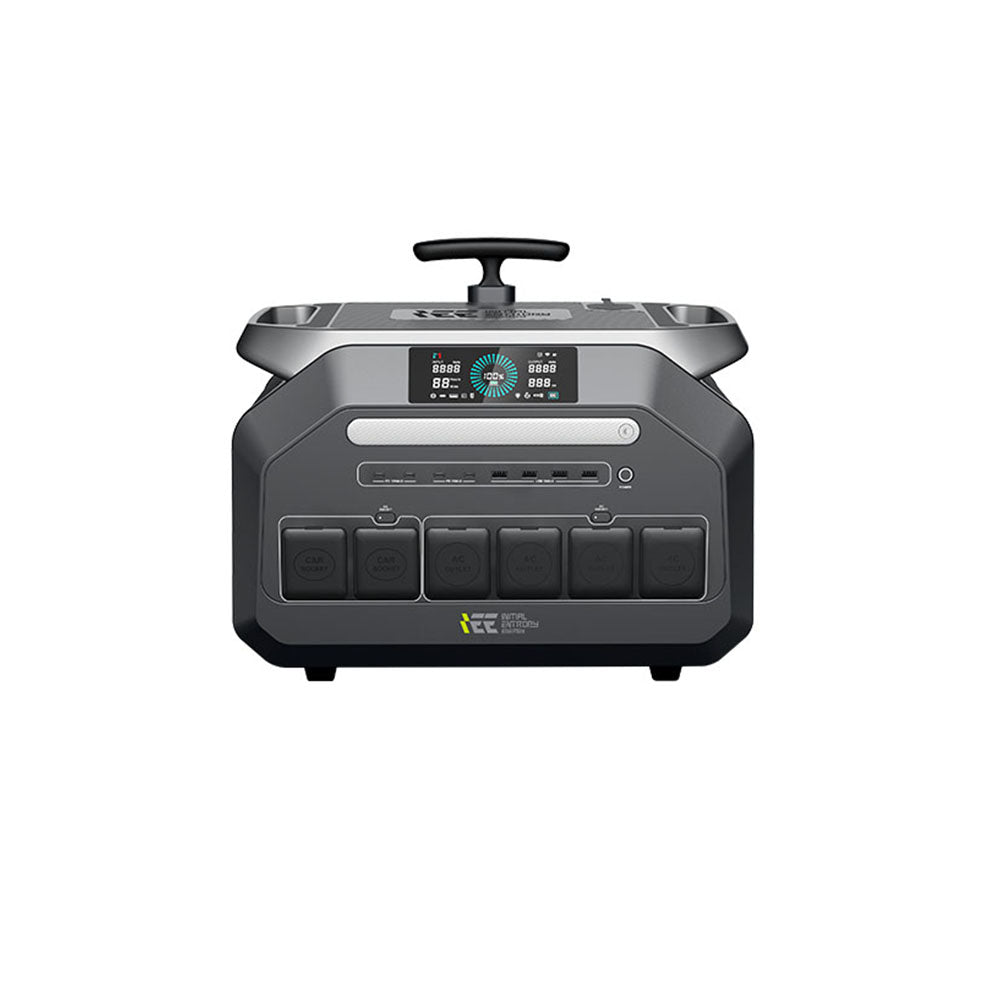
At IEETek, we engineer power solutions that empower your life, from everyday adventures to unexpected emergencies. Our P1800 portable power station are built with the precise features and rugged reliability that discerning homeowners demand.
Engineered for Resilience: The IEETek P1800s Philosophy
Every P-Series unit is crafted with a commitment to safety, longevity, and performance. We use only top-tier LiFePO4 batteries for a decade-long lifespan, integrate advanced MPPT technology for the fastest possible solar recharge, and equip them with pure sine wave inverters to protect your sensitive electronics. They are the silent, dependable guardians your home deserves.

5 Frequently Asked Questions About Solar Backup Power
1. Do I need to buy solar panels separately? It depends on the kit. Some power stations come as a bundle with compatible solar panels, while others are sold separately. Always ensure the solar panel's connector and voltage are compatible with your power station.
2. Can a solar generator really power my entire refrigerator? Absolutely. A modern, energy-efficient fridge uses about 1-2 kWh (1000-2000Wh) per day. A mid-sized solar generator like our P3200 (2048Wh) is more than capable of keeping your fridge running for a full day on a single charge.
3. How long does it take to recharge with solar panels? Recharge time depends on the battery capacity and the solar panel's wattage. Under ideal sunlight, a 200W solar panel can recharge a 1000Wh battery in about 5-6 hours. Using a 400W array would cut that time in half. MPPT controllers significantly improve this efficiency in real-world conditions.
4. Are solar generators safe to use indoors? Yes, 100%. This is their biggest advantage over gas generators. They produce no fumes, no carbon monoxide, and operate silently. They are perfectly safe for use in your living room, kitchen, or even a tent.
5. What's the difference between Watts (W) and Watt-hours (Wh)? This is the most important distinction! Think of it like a car: Watts (W) is how fast you can drive (power output), and Watt-hours (Wh) is how far you can go on a tank of gas (energy capacity). You need enough Watts to start your fridge, and enough Watt-hours to keep it running all night.
Conclusion: Empower Your Home, Empower Your Future
Choosing a solar-powered generator is no longer a niche hobby for off-grid enthusiasts; it's a practical, responsible, and empowering decision for any modern homeowner. It's about taking control of your energy needs, securing your family's comfort, and investing in a cleaner, quieter, and more resilient future.
By understanding your power requirements, knowing the key features to look for, and selecting a reliable, technologically advanced unit like the IEETek P1800, you're not just buying a battery—you're buying peace of mind. You're ensuring that when the lights go out elsewhere, your home remains a beacon of light, power, and comfort.